While these may seem like disparate topics, they have been interwoven in my recent experiences at site…
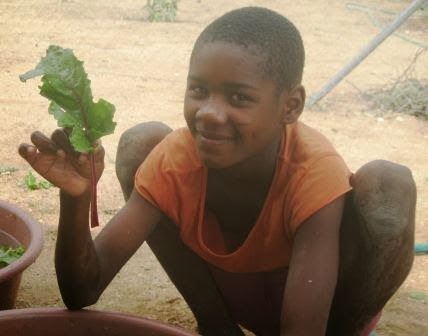
I have not posted photos in a while, so below are some recent ones. The first series are from our community garden project. As you may remember, our village was awarded a U.S. Ambassador Self-Help Grant to expand a garden and open a soup kitchen. Below are photos from the growing and flourishing garden, and my good friend working in the garden:


After working in the garden that day, a huge storm was ushered in. I love this first photo of the rain pouring through the clouds, and then one of the fierce cloud formation. In the almost 2 years that I have lived in Namibia, it has been drought conditions, but finally we are being blessed with abundant rain. This makes the farmers and predominantly agricultural sector in Namibia very happy!


A few weeks ago, the Government of Namibia declared a national prayer day focused on stopped gender-based violence. There has been a plague of so-called “passion-killings” which has ripped through the country in recent years, and has intensified in recent months. Since January of 2014, almost 60 men and women have been killed as a result of jealousy and violence in domestic partnerships. This is tragic. You have the feeling that it is not safe to be involved in a romantic relationship; look at how things end. I have heard many Namibian women express that they feel safer simply being alone. The day of prayer was a national wake-up call to work together and to strive for gender equality and mutual respect between men and women. The services and prayers were held throughout the country. In our village, everyone was invited to the sports field for singing, prayer, and speeches made by religious and church leaders. While I did not understand most of the prayers as they were given in the local languages (Oshiherero, Damara, Afrikaans), the mood of the ceremony was somber and reflective. One hopes that it will make a difference in the hearts and minds of people, and that we can move forward respecting each other and stopping senseless killing.

The final photos were taken during the Basic Information Science (BIS) training that I recently attended. Part of BIS as a subject is fostering a love of reading in students, which naturally includes library management on the part of the schools. (It is common for Peace Corps Volunteers to be involved in the management and improvement of libraries in schools.) During the training, we toured a local high school. What struck me most about the school was the stark disparity between how well it is equipped and the school where I teach. (The school we toured was an all-white school under apartheid Namibia. The school where I teach was an all-black school.) The significant disparity continues. Now all of the schools are supposedly mixed. But I notice a lot of differences. You can barely compare the school below to the school where I teach. Where I teach in the rural Namibian bush, there are holes in the walls and ceilings, most of the windows in the school are broken, and until recently, most of the desks and chairs were in pieces.
Another example of the disparity between the schools, and the legacy of apartheid, where schools were divided between black and white schools was at a track and field meet held earlier this year. The richest, private, nearly all-white school’s athletes flaunted shiny new track spikes and enjoyed the advantage of starting blocks during the sprints…while most of the other (black) kids ran barefoot and probably do not know what starting blocks are. This disparity is shameful, and brings to mind how recently the country was ruled by an apartheid regime.


As an outsider in Namibia, as a visiting, white American, I can feel the racial tension at times. I also know that what I feel is only a fraction of the pain, persecution and oppression faced by marginalized populations all over the world: indigenous communities, women and girls, GLBTQ communities, minorities, those infected with HIV or other diseases, the economically and socially marginalized. The secondary pain, compassionate or ally pain that we feel as human rights workers is an important teaching and learning experience – it allows us to understand (while never fully) and sympathize with those whom we ally with.
It is important to have open and honest discussions about race relations, equality, and the struggles we face in this area both in the U.S. and other countries in the world. Bel Hooks has made a compelling case for this in many of her books. She implores us to be honest and aware of the legacy of oppression and white supremacy. She encourages us to understand the theory behind it, but also to move towards the practice of disassembling it.
I conclude with a hope that Namibia, South Africa, the U.S., and all of the countries in the world, will continue in strides towards true reconciliation. That one day we can all really and truly forgive ourselves and each other for the pain and darkness in the past, and work together to create the peaceful and synergistic reality that we all crave.
Hi! It has been a while since I have posted. I had some computer issues, which have now been solved! I hope that all of you are FINE!
I am currently at a training for Basic Information Science (B.I.S.) - information technology. This, along with English, is one of the subjects I teach here in Namibia. While it is an elective, it is important because it is all about accessing information. And I tell my students daily: information is power! And growing up in poverty, you need to access all of the information and power that you can! I enjoy teaching B.I.S. because it is also about research, accessing data and information, how to conduct research, how to use the library and the Internet, and fostering a love of reading.
In addition to our service, much of Peace Corps is personal growth, and seeing your "old life" and your country and culture in a new perspective. Teaching B.I.S. and accompanying my students on their educational journey, I again see how I extremely fortunate I am. (Thank you, mom, for bringing me to the library as a child! What a gift!) All of us who have regular access to libraries, the internet, and other educational and communication platforms, are not only extremely lucky, we are also very much in the global minority.
Nelson Mandela said that:
"Education is the most powerful weapon which you can use to change the world."
and
"Education is the great engine of personal development. It is through education that the daughter of a peasant can become a doctor, that a son of a mineworker can become the head of the mine, that a child of farm workers can become the president of a great nation. It is what we make out of what we have, not what we are given, that separates one person from another."
Here in Namibia, strides are being made towards harnessing the true potential of education. Last week, the government announced that within the next few years, junior secondary education will be free. Last year, primary school education became free and fuly subsidized by the government. Soon, school fees will be waived for all students in grades 1 - 10. Unfortunately, many issues persist. As I saw in Kenya and here in Namibia, free schooling does not equate with open access. Families who cannot afford school uniforms or school supplies still struggle to give their children access to education. In my village, many students raise themselves because their families are working far away on the farm, or perhaps they are orphans. (The HIV/AIDS pandemic strikes hard, leaving many children without parents.)
On another note, I would like to pay tribute to Peace Corps Namibia Volunteer Ashley Earl, who passed away last week. You can read more here: http://www.peacecorps.gov/media/forpress/press/2342/ I did not know Ashley well, but it is clear that she was a great person, and that in her short life she gave a lot back. When I met her briefly, she struck me as gregarious and full of life. Her death touched all of us in Peace Corps Namibia. When you live and serve far from home, you truly see each other as family, and her death really brought that home. The staff here did a nice job of arranging a memorial service for her. My heart goes out to her family and friends.
Ashley's death reminds me to practice gratitude for the people in my life, and for the many blessings we have. Thank you to her for her service and thank you to everyone who supports us as volunteers to make our work possible. Finally, thank you to our communities and the people we work with for letting us into your communities and into your lives. Her death is a reminder to count our days, to make them count. Each day is a gift.
Below are photos from a wedding last weekend. The flat, point hats are traditional Herero dress. The pink dress is from the Ovambo tribe.


The highlight from yesterday was getting my shoes repaired. It was just one of those “African” moments. I know it is completely cliché to generalize a continent into one moment that I shared here in Namibia. BUT it is what came to mind…I had this shoe repair guy on recommendation. I could not find him at first, but upon asking a few people, I found him. He is a street shoe repairman, with his shop consisting of 2 benches, a toolbox full of shoe repair stuff, and piles of broken shoes. He is super awesome – full of Rasta, shoe polish stains all over his printed shirt and khaki cargo pants. I bartered with him until he agreed to repair my broken sandal for $1.50 USD. I sat and waited while he worked his expertise – I was impressed! He cut through the heavy sole and easily repaired the shoe before my very eyes. But the “African-ness” had to do not only with him, but with the surroundings. It was the very end of the month, the town was hopping! Everyone here gets paid at the same time, and thus RUSH to town to buy supplies (and drink) all at once. So while I sat on my new friend’s bench and waited for my shoe, there were “Nam Jams” BLASTING at full speed right behind me. There were multiple “shebeens” (informal bars) popping music and town was just full of hustle. A girl behind me was selling ice cream. Two women walked by selling cotton candy. Lots of guys in construction uniforms stared at the strange white girl getting her shoes repaired by the Rasta guy.
It was a cool moment; I enjoyed it. The shoe repair process allowed me to sit and enjoy the moment. Normally I would be annoyed by the crowds, the crazy music, but that day I was able to enjoy it, and to appreciate the uniqueness of it. A friend of mine who formerly served in Peace Corps Namibia, said that one thing she misses most is the fact that ANY day can turn out absolutely any way possible; often completely crazy and unexpected. An event. And this day was exactly like that. I didn’t expect the experience, but the experience found me.
And again, strangely, today, my day took a twist as the baboon family that lives near my village graced my path during my morning run. I stood and checked them out for maybe 5 minutes. They stared right back, asking “Is she safe?” Wondering who I was, what I was doing, if I would hurt them. They perch like birds, like small kids, right on top of the fence posts. They amble along, and play and gather together, keeping grouped up as a big family. I really love them. I know they are aggressive and the farmers here hate them because they are actually so smart, that they can pick and open locks, steal small sheep, and cause other havoc. But I love them. I love their personalities, their uniqueness, and the novelty of being able to see these animals in the wild that in the U.S. we only dream about or visit in the zoo. This is another example of the odd twists and turns one’s day can take here in Namibia. I am really loving it – very much in my element.

(written last weekend)
Today was my best day in Namibia. We harvested our community garden. For someone who has never gardened before, it was like many small miracles. In Namibia, the climate is so dry and hot, that vegetables sprout out like mad. Last year, the community in which I live was awarded a “U.S. Ambassador Self-Help Gran” to expand a garden and open a soup kitchen for individuals living with HIV/AIDs. A lot of time went into planning, shopping, planting, and finally today; we harvested some of the vegetables to sell to generate income to move the project towards self-sustainability.
We harvested HUGE beets, carrots, onions, and spinach. The people working on the project are amazing. We are very fortunate to have a stellar community leader who conceptualized and initiated the project, and she is able to command the support of many community members. Those that come to garden volunteer their time in order to help their community. In a very small, rural Namibian village where you literally cannot buy fresh vegetables, the project is helping many people by making these available to them.
Figures vary; but between 25 and 40% of Namibians are infected with HIV. Infection rates vary widely throughout the country. In my village, there are many people infected with HIV. In Namibia, anti-retrovirals (ARVs) are free. While it is fortunate that they are provided free of charge, ARVs wreak havoc on the body, weakening the body. It is thus very important that one on ARVs eats very nutritious food, exercises, and generally takes excellent care of their body. Due to extremely high poverty rates and unemployment, this is often not possible for people here. The project therefore aims provide these people with at least 1-2 healthy meals per week, full of fresh vegetables and nutrients.
The soup kitchen will be launched soon. We are optimistic about the positive impact that it may have on the community. There are always challenges and temporary setbacks with community development work, but incremental change is certainly possible.
Below are photos of the community garden, harvest, and preparation for sale in the village:


This is what the beets look like cut. I had to photograph them, because the vitamins practically jump out and into you!

Later in the weekend, I visited another friend in the location. She showed me these beautiful, neon-green worms, with silver detail. They eat them! Below are the worms, my friend, and her daughter.


Finally, I was very impressed with the boarding school students this weekend. About 6 of them came over Sunday morning, and told me they were going to church –without an adult, just small groups of kids, taking the impetus to get up, decide to go to church, and to get dressed up. Here is a photo of two of them:

School has begun again. The academic here runs Jan – Dec rather than Sept – May like in the U.S. The start of the school year is, um, sloowwww. We are still registering students, creating a timetable, etc. It is frustrating, but after a year and a half here, I at least know what to expect.
I will still be teaching English and Basic Information Science (I.T., research skills, information careers, working to foster a “reading culture,” etc.) Peace Corps Volunteers are mandated to cut our teaching load to 50% during our second year soas to focus more on our secondary projects. So Pena and I will continue with our community garden and soup kitchen for individuals living with HIV and AIDs, as well as our women’s group. At school, we will continue our spelling bees, debate team, and our Club Glow (leadership club).
Continuing to learn and to be challenged on a daily basis – essentially, I will be headed home in less than 8 months. Looking forward to next steps, but set to make the most out of the coming months.
Below are some photos from my village:
First, some of the kids who like to come over to play and colour ~


Recent rain, and a recent sunset ~


Village shots~


And a current photo of my community counterpart and my garden and soup kitchen project. The soup kitchen will serve individuals living with HIV and AIDs.

Below are photos from the December / January holidays. I was in Namibia and in Cape Town, South Africa.
While still in Namibia, my colleagues and I went on a retreat to Etosha National Park. Below you can see a photo of a white rhino and some photos from a beautiful lodge we stopped at on our way back.


Moving on to Cape Town…most of the photos can be divided into the categories of nature, and museums.
Nature: Beaches, Ocean, Coast, and Penguins
Below, you can see several shots of the beautiful Atlantic Ocean coast, and some African Penguins ~


Table Mountain
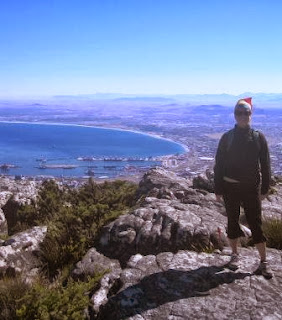
One day my friend Amandla (which means “power” in Xhosa, as in “Amandla Awetu,” or “the power is ours,” which was a common freedom slogan during the anti-apartheid struggle) and I hiked Table Mountain. It was an INCREDIBLE hike. I was completely high on the stunning natural beauty and epic vistas throughout the hike. Here are some shots from the top:


Bo Kaap
The Bo-Kaap neighborhood of Cape Town is famous for these brightly coloured houses. It is a dynamic neighborhood with a strong Muslim influence, and a small museum.

Museums: Iziko Slave Lodge, District Six Museum, Robben Island, Cape Town Civic Center Nelson Mandela Exhibition
Cape Town boasts many museums, many of which are free or very low in cost. They proved most interesting, and throughout my stay I gained a deeper and more expansive view of the history of South Africa, from slavery and apartheid to Cape Town today. It is clear that the country is a place of both tremendous struggle and tremendous triumph.
The Iziko Slave Lodge succeeds at paying tribute to both the pain and injustice of slavery as well as the tremendous economic impact that slaves had on the creation of Cape Town as a city. As the sign from the lodge below reminds, us, “powerful global economics throughout history have made profits and accumulated wealth through the slave trade.”


A memorial there honors the memories of the slaves that passed away in Cape Town. It reads:
“In the light of memory and remembering
Through the streams of our senses
Reconnecting ~ Recollecting ~ We find our way home.”
- Slave Dream, by Ma ika Ndloru, commissioned specially for the Slave Lodge
The District Six Museum pays tribute to the forced eviction of many black South Africans during apartheid. They were forced from their homes, and the entire District Six neighborhood was destroyed. Until today, the region has not been re-developed, because there is much political contention regarding how best to use the land, to remember and to pay tribute to those who were killed and/or lost their homes during this ugly part of history.
Next, came Robben Island. Robben Island is again a stunning tribute- honoring the memory of those who triumphed in the face of the worst kind of persecution: one that robs you of your very human dignity and self-worth. Prisoners of Robben Island were mistreated, abused, at times kept in solitary confinement, forced to work, all within view of the majesty and promise of freedom which Table Mountain symbolized. It is said that this was one of the most frustrating parts of being confined there; freedom was in plain view, but unobtainable. I marveled as I visited the island: how did Nelson Mandela and so many others maintain their hope, vision, and solidarity for a free and just South Africa? It is in this that Madiba embodied true leadership; he sacrificed everything for a cause much greater than himself, greater than any one individual.
Below are some of the locks of Robben Island...


I was truly humbled by the visit to Robben Island; and one exchange stands out in particular. All of the tour guides on the island are former prisoners. There was a moment when I came to be standing next to our tour guide. Not knowing how to show my appreciation for his sharing the historical site with us, I simply thanked him. Then I asked the first, and biggest, question that came into my mind.
“When you were freed, didn’t you want to get far away from this place?”
I asked, thinking he would not want to come back. His response saddened me, and illustrates the dark legacy of apartheid, the lingering economic inequality, and the imbalance in opportunity for certain segments of the population. He said he indeed did want to be far away from the former prison, and that initially he spent time far away. But when he was contacted and offered a position as a tour guide in his former prison, he felt forced to accept due to the high unemployment rate in South Africa. This man symbolizes what is often the case throughout the world. What was once political apartheid has been replaced by global economic apartheid. I will never forget the man’s face as he earnestly responded to my question. I hope that for his children and grandchildren, there will come a day when they enjoy greater equality, both in opportunity and in social status.


The Cape Town Civic Center is currently featuring an exhibition honoring and remembering Mandela. Below are some highlights of photos of Mandela, as well as some of his most stunning quotes. His words speak to his legacy: a true champion of human rights and social justice.


I was also proud that President Obama and First Lady Michelle Obama were honored with Cape Town’s “Freedom of the City” award:

Coming back from Robben Island, in the Cape Town harbor, resides the statue below of Reverend Desmond Tutu:

And in the festive spirit, some new NIA friends and I enjoyed these pomegranate mojitos on one of my last evenings in Cape Town:

Finally, I am including photos below of hartebeest and a vista from a farm near Windhoek, Namibia’s capitol city.


I will conclude with a quote by Oliver Tambo, who was a prominent apartheid freedom fighter who worked closely with Mandela.
“The ‘haves’ cannot continue to exist at the expense of the ‘have-nots’ – freedom has to reflect a difference in the conditions of life.”
Here is to justice, freedom, reconciliation, and respect amongst us as individuals, all groups of people, and countries of the world into 2014 and beyond. Cape Town is an amazing testament to the triumph of justice over bigotry and to the power of good and its inevitable triumph over evil.